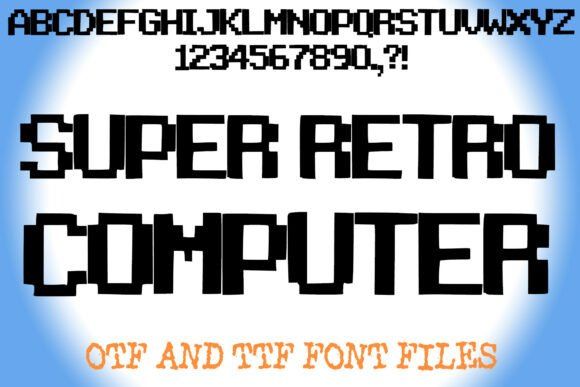
Super Retro Computer Font Review for Makers
I was in the middle of designing a set of custom labels for a local gamer’s birthday party when I realized my usual go-to typefaces just weren’t cutting it. I needed something that screamed nostalgia, something that felt like it belonged on a CRT monitor from 1985. That is when I pulled up Super Retro Computer, a bold pixelated display font inspired by vintage arcade games and 8-bit graphics. As a creator who spends half their life tweaking kerning and the other half wrestling with vinyl cutters, finding the right Fonts can make or break a product listing. This particular Display typeface immediately caught my eye because it balances that chunky, blocky aesthetic with enough clarity to remain legible on small surfaces.
Using Super Retro Computer for Retro-Themed Posters and Wall Art
When you are working with Super Retro Computer, the first thing you notice is its inherent personality. It is not just a font; it is a time machine. I tested this typeface on a series of printable wall art designs intended for a teen’s gaming room. The goal was to create quotes that looked like high-score screens or game over messages. Because Super Retro Computer is a bold pixelated display font inspired by vintage arcade games and 8-bit graphics, it naturally lends itself to these kinds of projects. The pixels are distinct and sharp, which means they print beautifully on standard cardstock without looking muddy or blurred.
For makers selling digital downloads or physical prints, this font adds instant value. It transforms a simple phrase into a piece of pop culture history. Whether you are designing retro-themed posters for a man cave or creating inspirational quotes with a tech twist, this font holds its own. The weight of the letters is substantial, making them perfect for large-format prints where you want the text to be the hero of the design. It captures the essence of early computing, appealing directly to customers who have a soft spot for the golden age of video games.
Designing Video Game Party Invitations with Super Retro Computer
One of the most practical applications I found for this typeface was in stationery design, specifically for birthday invitations. If you are a seller on platforms like Etsy, you know that themed parties are a huge market. I used Super Retro Computer to create a "Level Up" birthday invitation suite. The font worked exceptionally well for the main headers, such as the child’s name and the age they were turning. Since Perfect for retro-themed posters, tech content, video games, or anything nostalgic, this font brings an immediate sense of fun and excitement, it sets the tone for the entire event before the guest even opens the envelope.
However, as a practical designer, I have to mention readability. While the font is stunning for titles and short phrases, it is not ideal for long paragraphs of body text. For the invitation details, such as the date, time, and location, I paired Super Retro Computer with a clean, simple sans serif font. This contrast ensures that the important information is easy to read while still maintaining the overall 8-bit aesthetic. This pairing strategy is crucial for any maker looking to use decorative Fonts in commercial products. It allows you to leverage the visual impact of the display font without sacrificing functionality.
Creating Nostalgic Tech Content and Digital Graphics
Beyond physical products, Super Retro Computer is a powerhouse for digital content creators. I tested it on several social media graphics and blog headers for a tech review site that focuses on vintage hardware. The font’s pixelated structure aligns perfectly with screenshots of old software and hardware photos. It creates a cohesive brand identity that speaks directly to enthusiasts of retro technology. When you are creating tech content, consistency is key, and this font provides a strong visual anchor.
The versatility of this Display font extends to YouTube thumbnails and podcast cover art as well. In a crowded digital landscape, having a typeface that stands out is essential. The bold nature of Super Retro Computer ensures that text remains visible even at smaller sizes on mobile devices. For designers working in video games or indie development, this font can also serve as a placeholder or final asset for in-game UI elements, dialogue boxes, or title screens. Its authentic 8-bit look saves developers time by eliminating the need to create custom pixel art for text.
Packaging Design and Merchandise with Super Retro Computer
Let’s talk about merchandise. I applied Super Retro Computer to a mockup for a line of tote bags and mugs aimed at programmers and gamers. The result was striking. The blocky letters translate well to screen printing and sublimation because the edges are defined and do not require complex gradients. For makers using cutting machines like Cricut or Silhouette, this font can be tricky if you are trying to cut very small details, but for larger decals on laptops or water bottles, it performs admirably. Just ensure your weedable vinyl is high quality to handle the square corners of the pixelated design.
When using this font for anything nostalgic, consider the context of the product. It works beautifully on stickers, enamel pins, and t-shirts where the design is meant to be a statement piece. However, avoid using it for intricate logo designs that need to scale down to favicon size, as the pixel details may get lost. Instead, use it for brand elements that will be displayed prominently. The charm of Super Retro Computer lies in its imperfection and its homage to the limitations of early graphic processing, which resonates deeply with a specific audience.
Pairing Super Retro Computer with Modern Typography
To get the most out of this premium font, you need to understand how to pair it. I found that combining Super Retro Computer with a minimalist sans serif or a neutral handwritten font creates a balanced composition. The contrast between the rigid, digital pixels and the organic flow of a script or the cleanliness of a modern typeface adds depth to your designs. This approach is particularly effective for brand identity projects where you want to evoke nostalgia without feeling dated. It allows the retro element to be an accent rather than the entire foundation.
Before you finalize your designs for sale, always check the licensing terms. Ensure that your intended use, whether for physical merchandise or digital downloads, is covered under the commercial license. Also, test your files at different resolutions. Since this is a pixel-based aesthetic, scaling it up too much without proper anti-aliasing settings can sometimes introduce unwanted jaggedness, although that is often part of the charm. By understanding the technical nuances of Super Retro Computer, you can create products that are not only visually appealing but also professionally executed.